Every application begins with an idea.
Someone identifies a problem that needs solving or imagines a better way to accomplish a task.
That idea may eventually become a website, a mobile application, a desktop program, or an enterprise software platform used by millions of people.
Turning an idea into working software, however, requires much more than writing code.
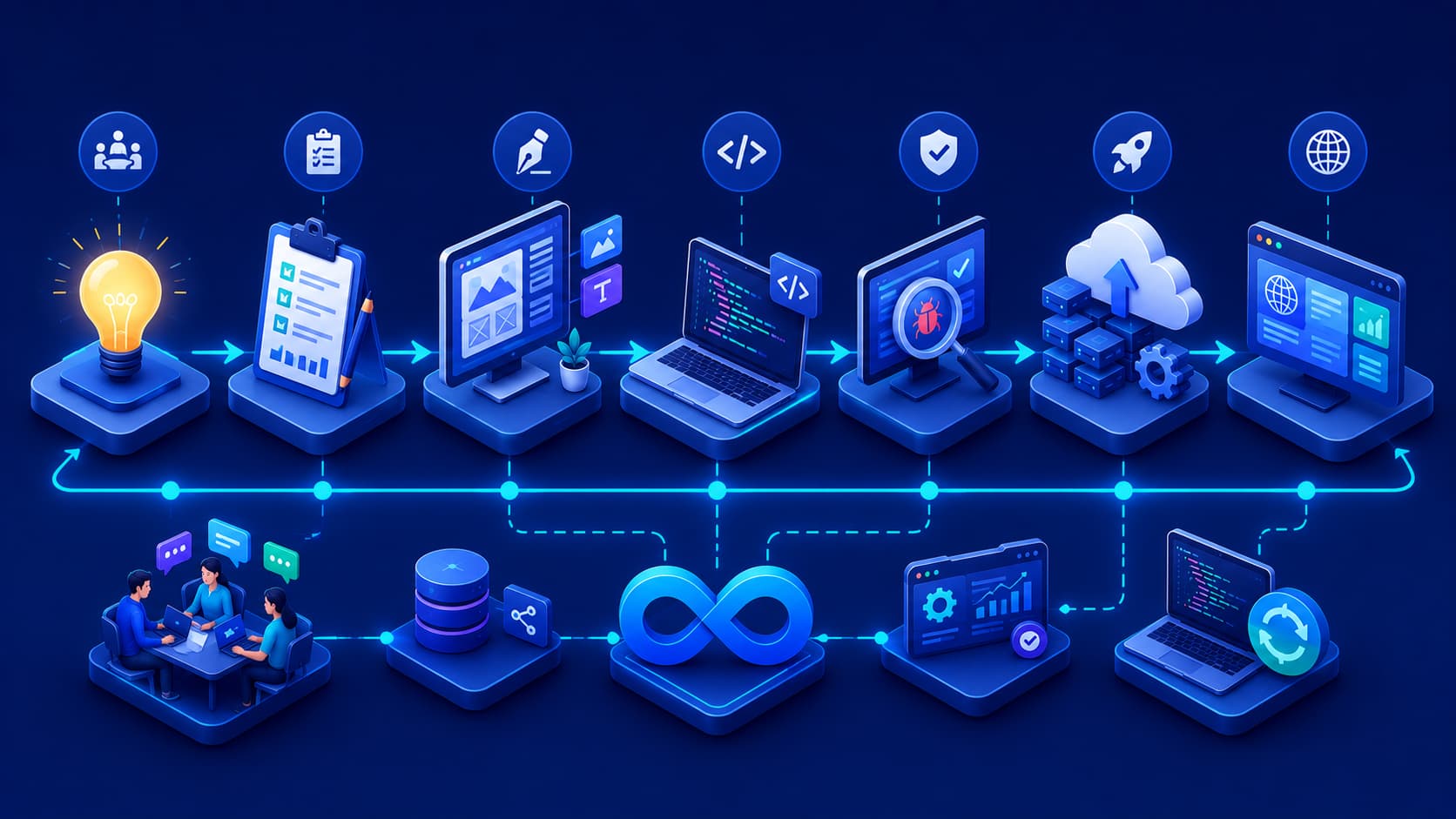
Successful software development involves planning, designing, building, testing, deploying, and continuously improving the product over time.
Each stage contributes to creating software that is reliable, secure, and capable of meeting user needs.
This structured approach is often called the Software Development Lifecycle (SDLC).
Although development teams may follow different methodologies, most software projects move through a series of similar stages from concept to release.
Understanding this process helps explain why software development is a collaborative effort involving designers, developers, testers, project managers, and many other specialists.
What Is Software Development?
Software development is the process of designing, creating, testing, deploying, and maintaining software applications.
It combines technical knowledge, creativity, and problem-solving to transform ideas into practical digital solutions.
Software development isn't limited to programming.
Writing code is only one part of a much larger workflow.
Successful projects also require planning, communication, testing, documentation, security, and long-term maintenance.
Whether the software is created by a single developer or a global engineering team, the overall goal remains the same:
Deliver software that solves real problems effectively.
Step 1: Planning
Every software project begins with planning.
Before developers write code, they first define the problem the software is intended to solve.
Planning often includes identifying:
- Project goals.
- Target users.
- Core features.
- Technical requirements.
- Budget and timeline.
- Potential risks.
Good planning reduces uncertainty and helps development teams make better decisions throughout the project.
Step 2: Design
Once the project goals are clear, the next step is designing the software.
Design includes both the user experience and the technical architecture.
Teams may create interface mockups, user flows, database designs, and system diagrams before development begins.
A thoughtful design process helps ensure that the final software is both functional and easy to use.
Step 3: Development
After planning and design are complete, developers begin writing code.
This stage transforms ideas into working software.
Depending on the project, developers may build:
- User interfaces.
- Business logic.
- Databases.
- APIs.
- Security features.
- Integrations with external services.
Development often happens incrementally, with features being added, reviewed, tested, and improved throughout the project rather than all at once.
Step 4: Testing
Writing software is only part of the development process.
Before software reaches users, it must be tested to ensure it behaves as expected.
Testing helps identify bugs, improve reliability, and verify that new features work correctly.
Depending on the project, testing may include:
- Verifying individual features.
- Checking how different components work together.
- Confirming that the software performs well under realistic workloads.
- Identifying security issues.
- Ensuring compatibility across supported devices and operating systems.
Finding problems before release is generally much less expensive than fixing them after users encounter them.
For this reason, testing remains an essential stage of software development.
Step 5: Deployment
Once the software has been tested and approved, it can be released to users.
This stage is known as deployment.
For desktop applications, deployment may involve publishing installation packages.
For mobile applications, it often means releasing updates through application stores.
For web applications, deployment usually involves publishing the latest version to production servers or cloud infrastructure.
Although deployment marks an important milestone, it doesn't mean development has ended.
Instead, it represents the beginning of the software's operational life.
Step 6: Maintenance and Continuous Improvement
Software continues evolving after its initial release.
Developers regularly fix bugs, improve performance, strengthen security, and introduce new features based on user feedback and changing requirements.
Maintenance may include:
- Fixing reported issues.
- Improving application performance.
- Updating software for new operating systems.
- Addressing security vulnerabilities.
- Adding requested functionality.
- Improving usability and accessibility.
Many successful software products have been continuously improved for years, demonstrating that software development is an ongoing process rather than a one-time project.
Software Development Is a Team Effort
Modern software projects are rarely built by a single individual.
Instead, teams with different areas of expertise collaborate throughout the development process.
Depending on the project, contributors may include:
- Software developers.
- User interface (UI) designers.
- User experience (UX) designers.
- Quality assurance (QA) engineers.
- Project managers.
- Security specialists.
- DevOps engineers.
- Technical writers.
Each role contributes unique skills that help transform an idea into reliable software.
Even small development teams often share responsibilities across multiple disciplines.
Development Methodologies
Not every software project follows the same workflow.
Different teams use different development methodologies depending on project size, goals, and organizational needs.
Some teams prefer highly structured planning before development begins.
Others release smaller updates frequently and adapt based on user feedback.
Although methodologies differ, the core stages of planning, design, development, testing, deployment, and maintenance remain common across most software projects.
The objective is always the same: delivering software that meets user needs while maintaining quality and reliability.
Common Misconceptions About Software Development
Software Development Is Not Just Programming
Programming is an essential part of software development, but it represents only one stage of the overall process.
Planning, design, testing, security, deployment, documentation, and maintenance all contribute to creating successful software.
Software Is Never Truly "Finished"
Many people assume software development ends after release.
In reality, software continues evolving through updates, performance improvements, security patches, and new features.
Continuous improvement has become a standard part of modern software development.
Bigger Teams Don't Always Build Better Software
While large projects often require larger teams, successful software depends more on effective collaboration, communication, planning, and technical quality than on team size alone.
Small, well-organized teams frequently build outstanding software.
Frequently Asked Questions
What is the software development lifecycle (SDLC)?
The Software Development Lifecycle is a structured process that guides software from planning and design through development, testing, deployment, and ongoing maintenance.
Is programming the same as software development?
No.
Programming focuses on writing code, while software development includes many additional activities such as planning, design, testing, deployment, documentation, and maintenance.
Why is software testing important?
Testing helps identify defects before software reaches users, improving reliability, security, performance, and overall quality.
Does software development end after release?
No.
Most software continues receiving updates, bug fixes, security improvements, and new features throughout its lifecycle.
Can one person develop software?
Yes.
Small applications are often created by individual developers.
Larger projects typically involve teams with specialized roles working together.
Conclusion
Software development is a structured journey that transforms ideas into practical digital solutions.
Although writing code is a central part of that journey, successful software also depends on careful planning, thoughtful design, thorough testing, reliable deployment, and continuous improvement.
Understanding the software development lifecycle provides valuable insight into how modern applications are created and maintained.
Whether you're interested in becoming a developer or simply curious about how software reaches your devices, recognizing the collaborative nature of software development helps explain why today's applications continue evolving long after their initial release.
In the next article, we'll explore common software mistakes users make, highlighting everyday habits that can reduce performance, create security risks, or negatively affect the overall software experience.