Every time you turn on your computer or unlock your smartphone, one piece of software begins working long before any application appears on the screen.
You don't usually see it loading.
You rarely think about it while checking email, browsing the web, or watching videos.
Yet without it, none of those activities would be possible.
This essential software is called the operating system, often shortened to OS.
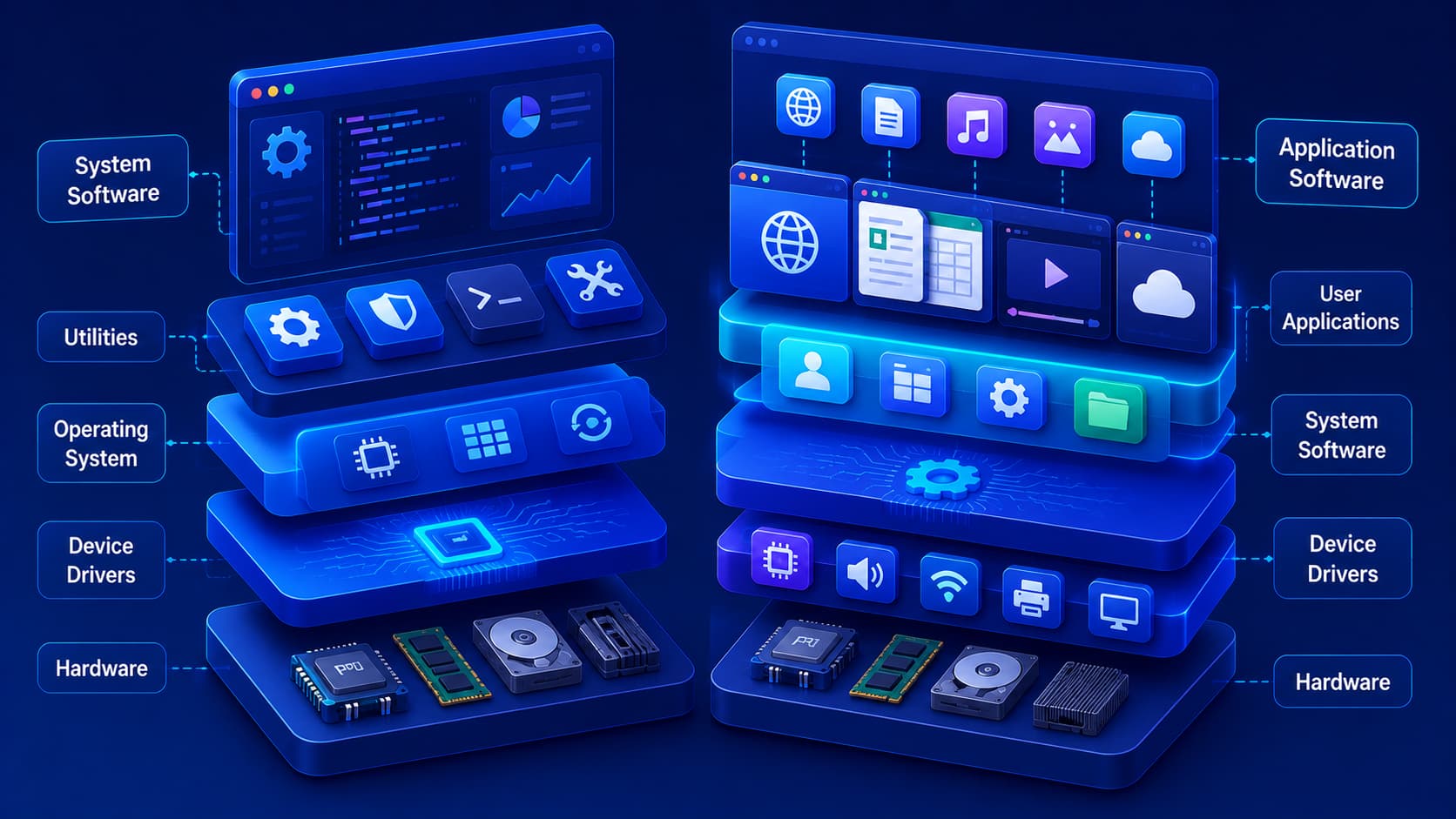
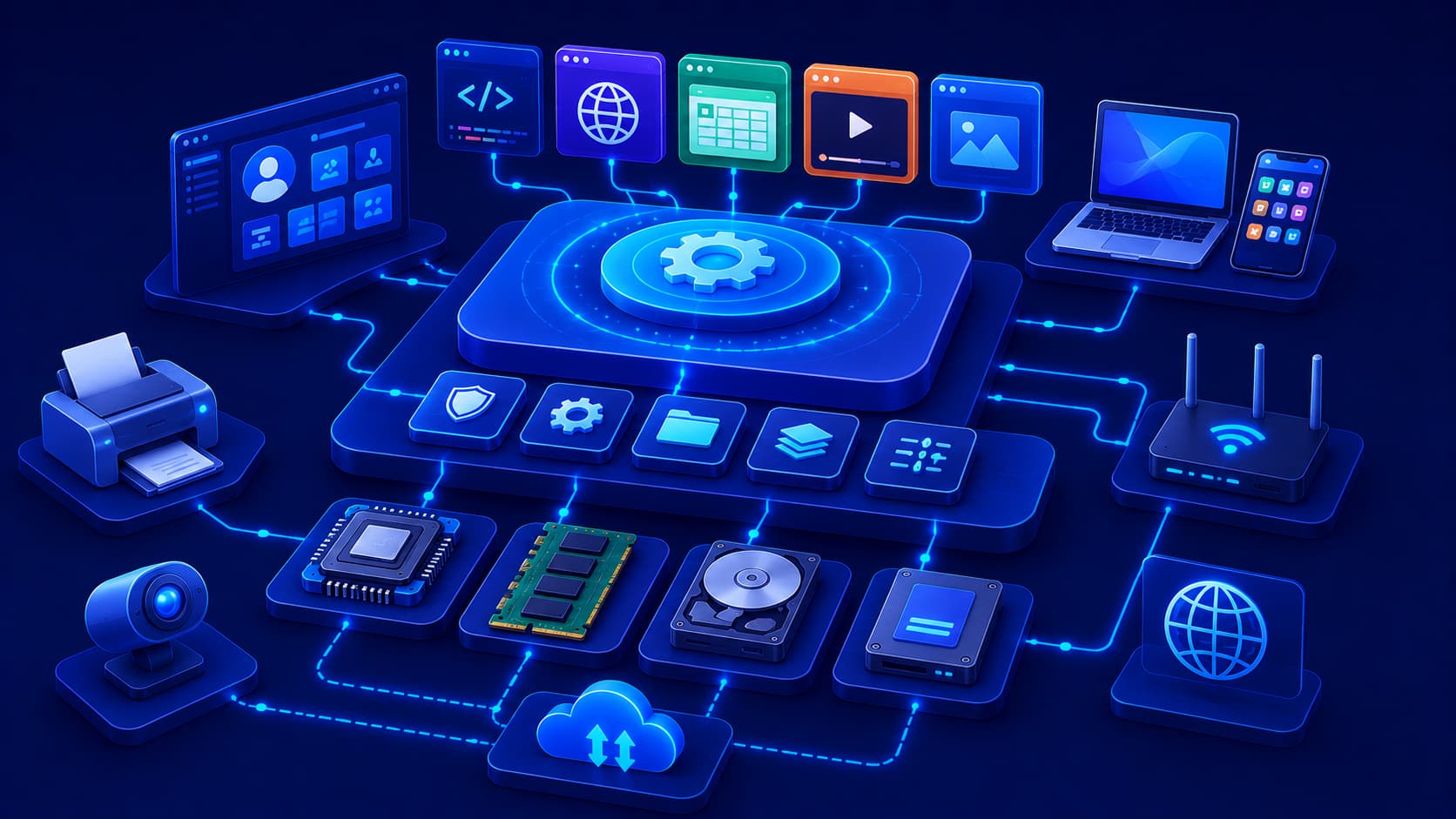
An operating system serves as the bridge between hardware and software.
It manages the computer's resources, coordinates communication between different components, and provides the environment that applications need in order to run.
Without an operating system, using a modern computer would be extremely difficult.
Users would need to control hardware directly, manage memory manually, and coordinate every device individually.
The operating system performs all of those complex tasks automatically, allowing people to focus on using their devices instead of managing them.
What Is an Operating System?
An operating system is a type of system software that manages a computer's hardware and provides services for application software.
It acts as the central coordinator for the entire system.
Whenever an application needs memory, storage, network access, or input from a keyboard or touchscreen, it communicates through the operating system.
The operating system determines how those requests are handled and ensures that multiple programs can share system resources efficiently.
Without this coordination, modern computing would be unstable, inefficient, and difficult to use.
Why Is an Operating System Important?
The operating system makes computers practical for everyday use.
Instead of requiring users to understand complex hardware details, it provides a consistent environment where applications can run safely.
It also prevents different programs from interfering with one another by managing access to shared resources.
As a result, users can switch between applications, save files, connect to networks, and use peripheral devices without worrying about the underlying hardware.
This layer of abstraction is one of the key reasons modern computers are both powerful and user-friendly.
Core Responsibilities of an Operating System
Although operating systems include many features, their responsibilities generally fall into several major areas.
Resource Management
The operating system decides how processor time, memory, storage, and other hardware resources are allocated among running applications.
This helps ensure that multiple programs can operate smoothly at the same time.
File Management
Operating systems organize files and directories so users and applications can store, retrieve, move, and delete information efficiently.
Without file management, keeping track of digital information would quickly become unmanageable.
Device Management
Computers communicate with many different hardware devices, including displays, keyboards, printers, storage drives, cameras, and network adapters.
The operating system coordinates communication with these devices, allowing applications to use them without needing to understand their technical details.
User Interface
Most operating systems provide graphical interfaces that allow users to interact with computers through windows, icons, menus, and touch controls.
Some environments also support command-line interfaces that provide more direct control over system operations.
How Operating Systems Work
Although operating systems perform many complex tasks, their basic role is straightforward.
They act as the central manager of the computer.
When an application starts, the operating system loads the necessary files into memory, assigns processor time, and provides access to hardware resources.
As multiple applications run simultaneously, the operating system coordinates their activities to prevent conflicts and keep the system responsive.
Instead of allowing every application to communicate directly with hardware, the operating system serves as an intermediary.
This design improves security, stability, and efficiency while simplifying software development.
Multitasking
One of the most valuable features of modern operating systems is multitasking.
Users expect to browse the web while listening to music, downloading files, receiving notifications, and editing documents—all at the same time.
The operating system makes this possible by rapidly switching processor time between running applications.
Although it may appear that everything is happening simultaneously, the operating system carefully schedules each task to create a smooth user experience.
Efficient multitasking has become one of the defining characteristics of modern computing.
Security and User Management
Operating systems also play an important role in protecting computers and user data.
They manage user accounts, control access permissions, and help prevent unauthorized software from accessing sensitive information.
Modern operating systems include security features such as:
- User authentication.
- File permissions.
- Application isolation.
- Encryption support.
- Security updates.
These features reduce the risk of accidental damage and help defend systems against many common security threats.
While no operating system can eliminate every risk, it provides an essential foundation for computer security.
Examples of Operating Systems
Many operating systems exist today, each designed for different types of devices and use cases.
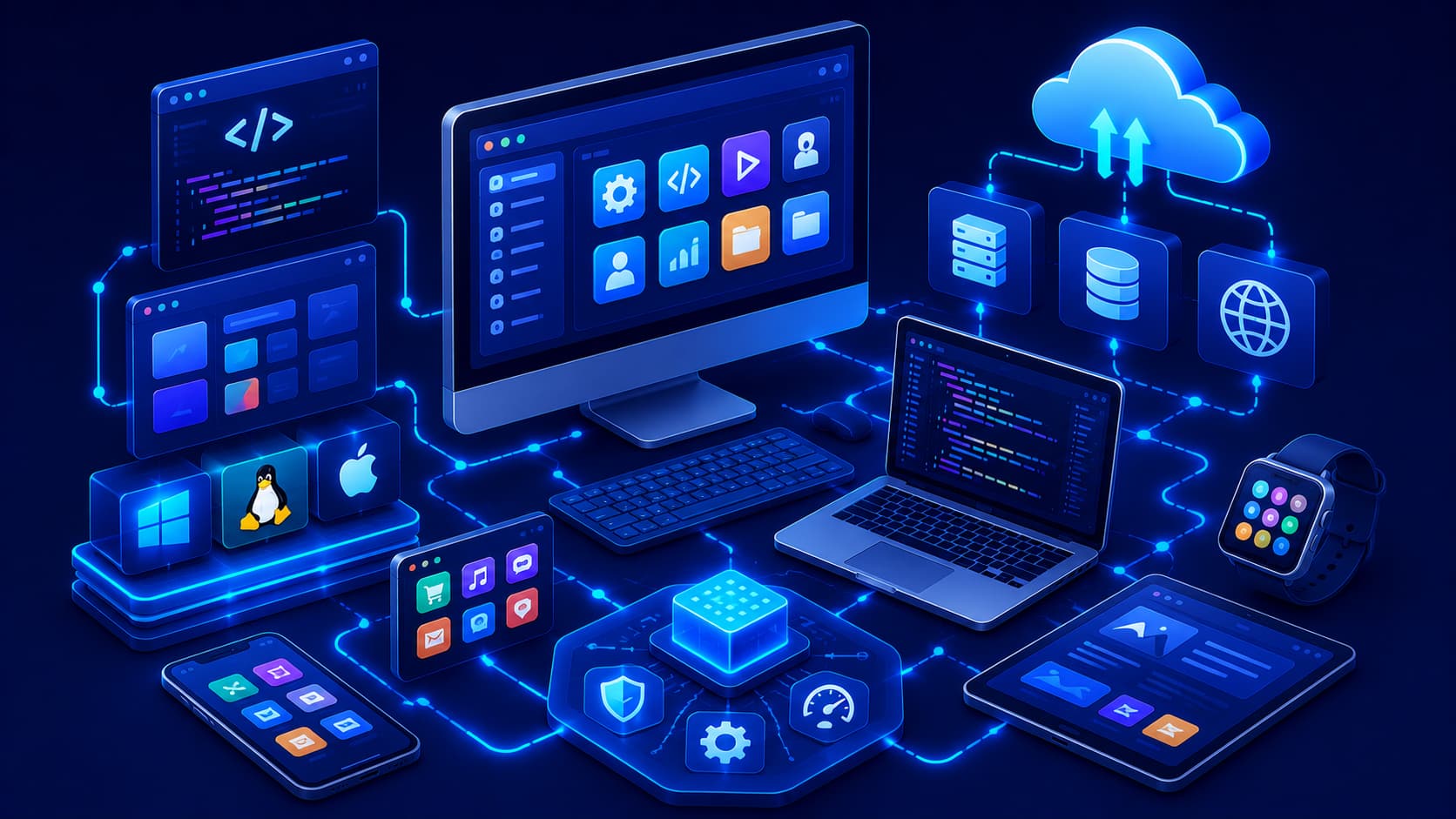
Some are intended for personal computers, while others power smartphones, servers, embedded devices, or cloud infrastructure.
Although their interfaces and capabilities differ, they all perform the same fundamental responsibilities:
- Managing hardware.
- Running applications.
- Organizing files.
- Coordinating system resources.
- Providing a user interface.
Understanding these shared responsibilities is more important than memorizing the features of any particular operating system.
Operating Systems Continue to Evolve
Operating systems are constantly improving.
Developers regularly release updates that introduce new features, improve performance, strengthen security, and enhance compatibility with new hardware.
As technology evolves, operating systems adapt to support emerging technologies such as cloud computing, virtualization, artificial intelligence, and increasingly powerful processors.
This continuous development allows computers and mobile devices to remain useful for many years after they are first released.
Common Misconceptions About Operating Systems
The Operating System Is Not the Entire Computer
Some people think the operating system and the computer are the same thing.
In reality, the operating system is software that manages the hardware.
The computer itself also includes physical components such as the processor, memory, storage, and display.
Applications Are Not Part of the Operating System
Applications run on top of the operating system.
Although some operating systems include built-in utilities, most software that users install operates independently while relying on the operating system for core services.
Faster Hardware Doesn't Eliminate the Need for an Operating System
Even the most powerful processor cannot manage hardware resources, schedule applications, organize files, or provide a usable interface on its own.
Those responsibilities remain the job of the operating system.
Frequently Asked Questions
What is an operating system in simple terms?
An operating system is system software that manages hardware resources and provides the environment needed for applications to run.
Why does every computer need an operating system?
Without an operating system, users would need to communicate directly with hardware, making computers extremely difficult to use.
Is an operating system considered software?
Yes.
An operating system is one of the most important examples of system software.
Can one computer have more than one operating system?
Yes.
Some computers are configured to support multiple operating systems, allowing users to choose which one to start when the device boots.
Why are operating system updates important?
Updates improve security, fix bugs, enhance performance, and maintain compatibility with modern hardware and software.
Conclusion
The operating system is the foundation that makes modern computing possible.
By managing hardware resources, coordinating applications, organizing files, and providing user-friendly interfaces, it transforms complex electronic components into devices that people can use every day.
Although much of its work happens behind the scenes, the operating system influences nearly every interaction users have with their computers, smartphones, and other digital devices.
Understanding its role provides a stronger appreciation of how software and hardware work together to deliver reliable, secure, and efficient computing experiences.
In the next article, we'll explore open source software, examining what it means for software to have publicly available source code, how open source projects are developed, and why they play such an important role in today's technology ecosystem.