Modern computers perform far more than simple calculations.
They display high-resolution graphics, render realistic 3D environments, edit videos, process artificial intelligence models, and support complex scientific simulations.
Although the CPU coordinates many general computing tasks, another processor is specifically designed to handle graphics and highly parallel workloads.
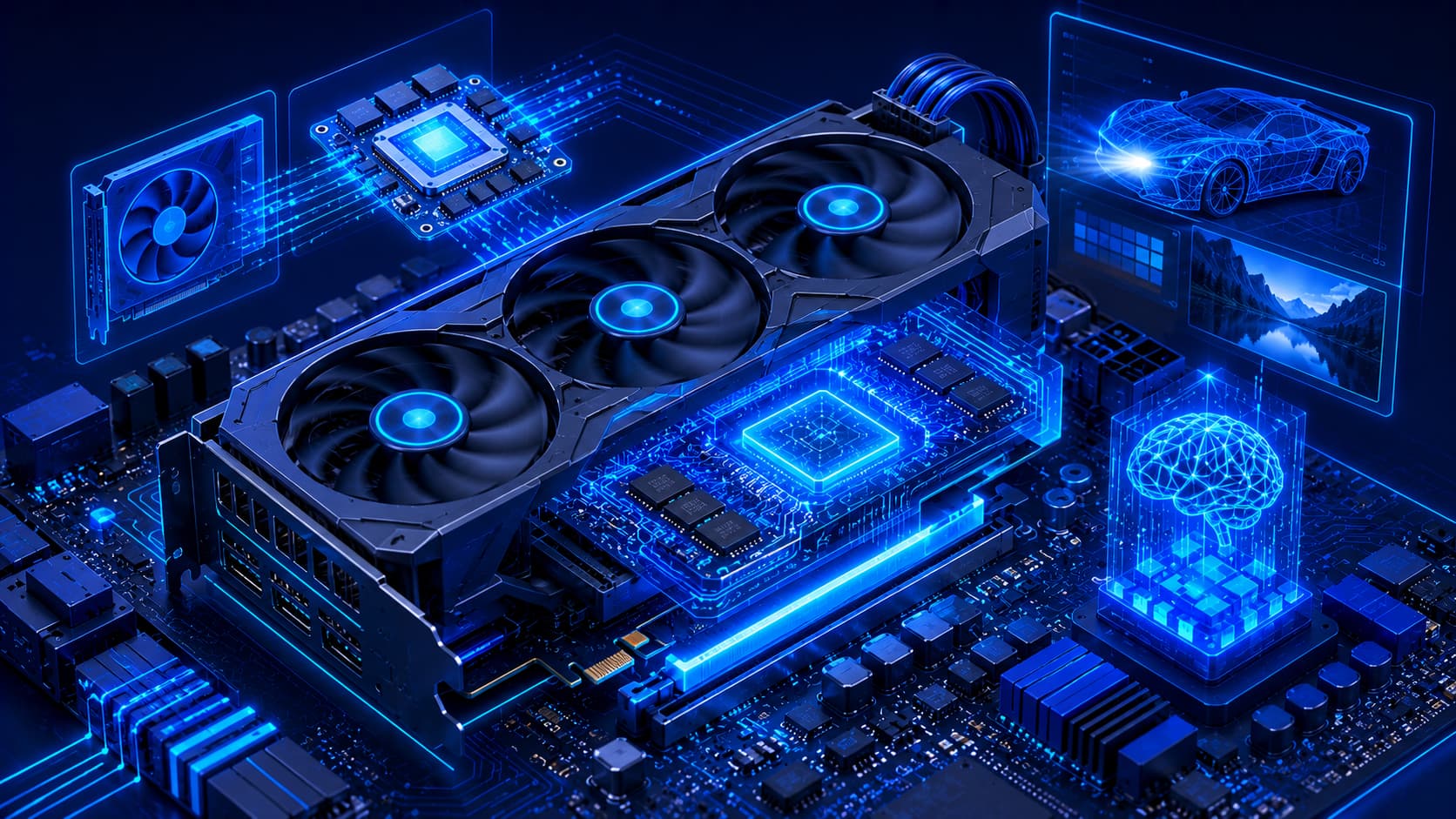
This specialized component is called the Graphics Processing Unit, or GPU.
Originally developed to accelerate graphics rendering, GPUs have evolved into powerful processors capable of handling many different types of computation.
Today, they contribute not only to gaming but also to video production, machine learning, engineering, scientific research, cryptocurrency technologies, and numerous professional applications.
Understanding how GPUs work helps explain why they have become one of the most important components in modern computers.
What Is a GPU?
A GPU is a specialized processor designed to perform large numbers of calculations simultaneously.
Unlike a CPU, which focuses on handling a wide variety of general-purpose computing tasks, a GPU is optimized for processing workloads that can be divided into many parallel operations.
This design makes GPUs especially effective at rendering images, processing video, performing visual effects, and accelerating computational tasks that involve massive amounts of data.
Modern operating systems and applications often rely on both the CPU and GPU working together to deliver smooth performance.
Why Is a GPU Important?
The GPU is responsible for generating the images displayed on monitors and other visual output devices.
Whenever you watch a video, play a game, edit photos, or use a three-dimensional application, the GPU helps process the graphical information required to produce those visuals.
Beyond graphics, GPUs have become valuable for many other workloads because they can process large amounts of data simultaneously.
This capability has made them increasingly important for artificial intelligence, data analysis, simulation, and other computationally intensive fields.
How a GPU Works
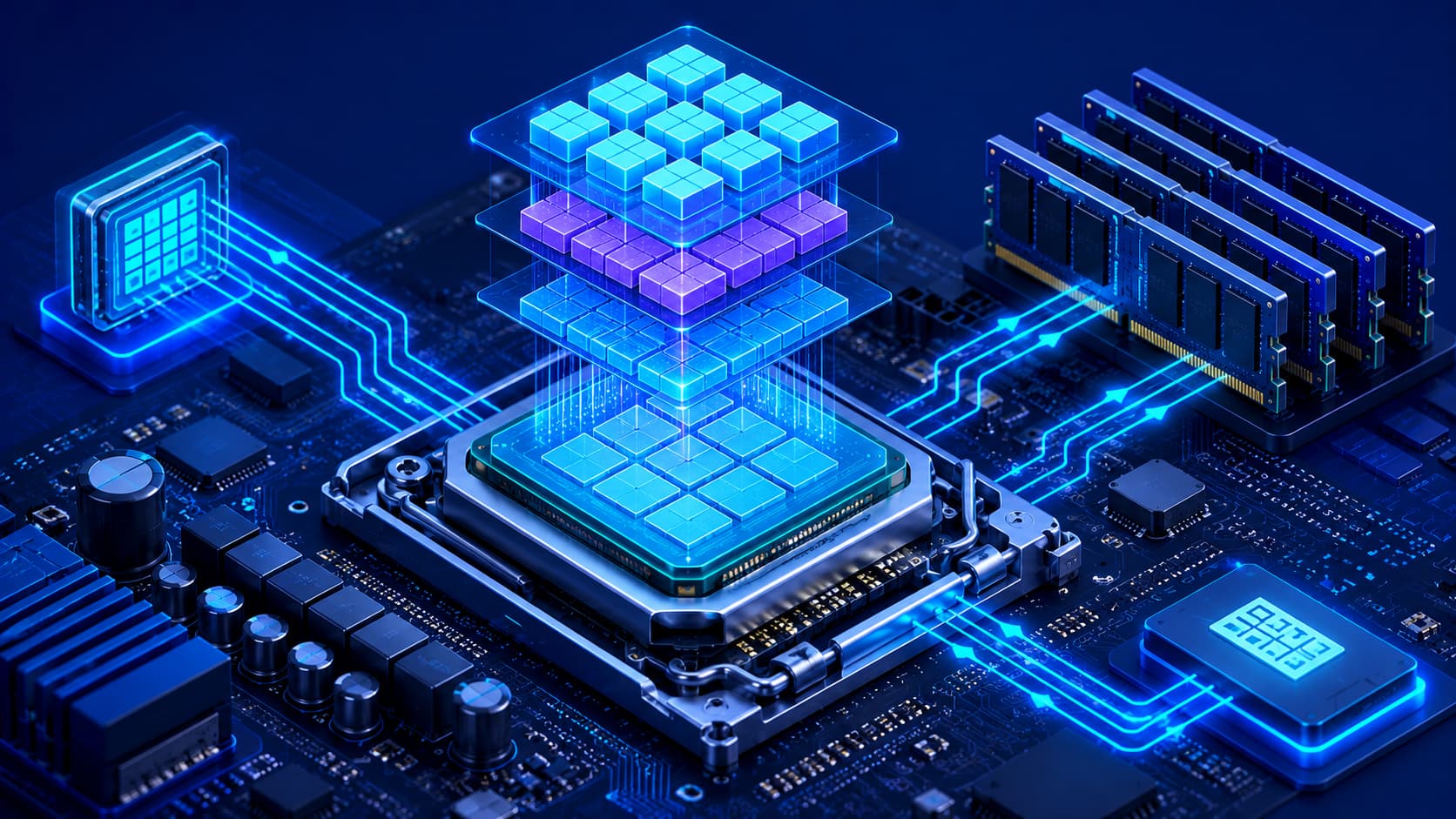
A GPU processes many small tasks at the same time.
Instead of focusing on sequential instruction execution like a CPU, it distributes work across a large number of processing units designed for parallel computation.
For example, when rendering a complex scene in a game, millions of pixels and graphical calculations must be processed rapidly.
The GPU performs these calculations simultaneously, allowing images to appear smoothly on the screen.
This parallel processing capability also benefits many non-graphics applications that require large-scale mathematical computation.
GPU and the CPU
Although both are processors, the CPU and GPU have different responsibilities.
The CPU manages the overall operation of the computer.
It executes operating system instructions, runs applications, manages system resources, and coordinates communication between hardware components.
The GPU focuses on graphics rendering and parallel computation.
Rather than replacing one another, the CPU and GPU complement each other.
Together, they enable modern computers to deliver responsive performance across a wide range of workloads.