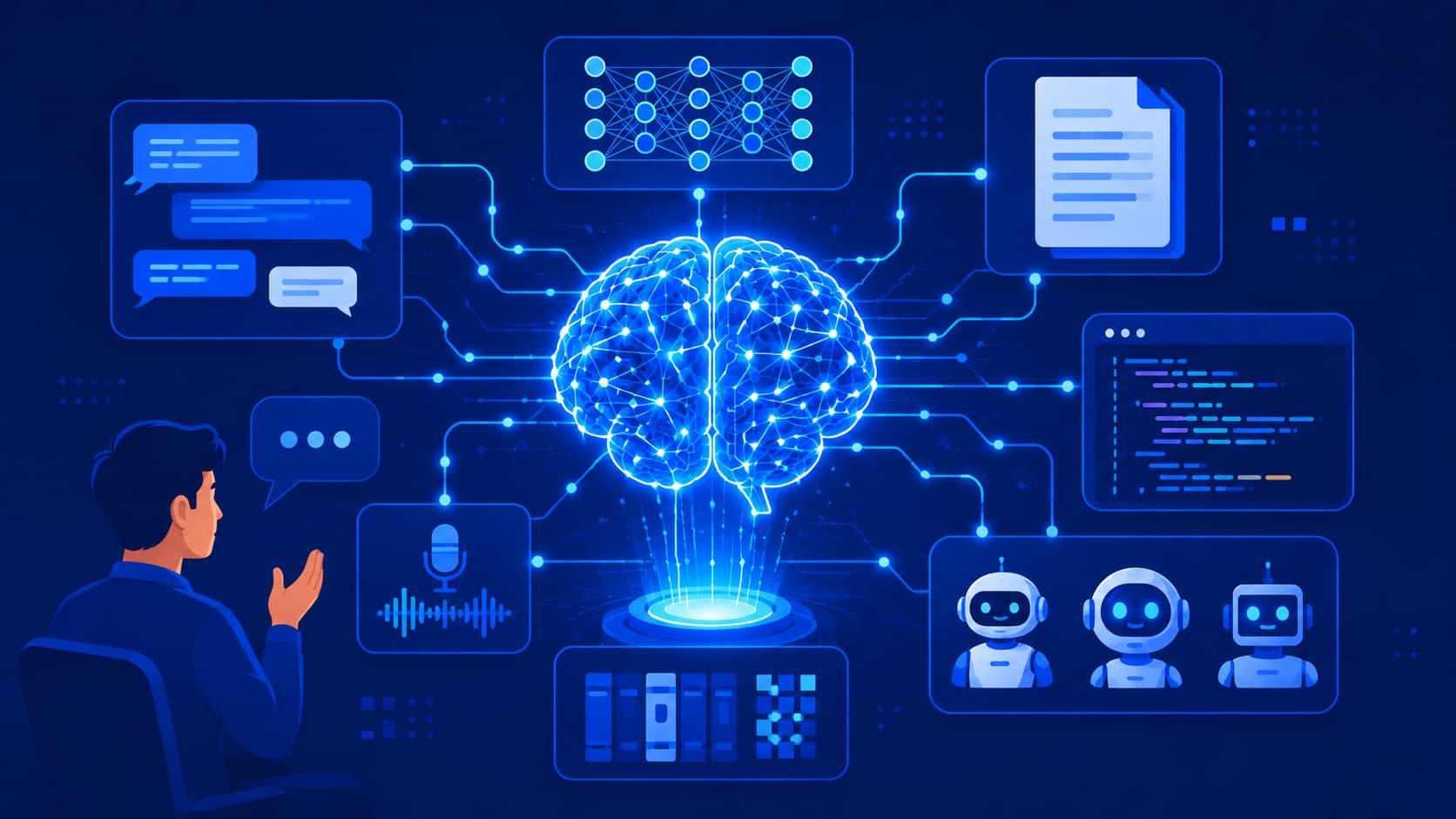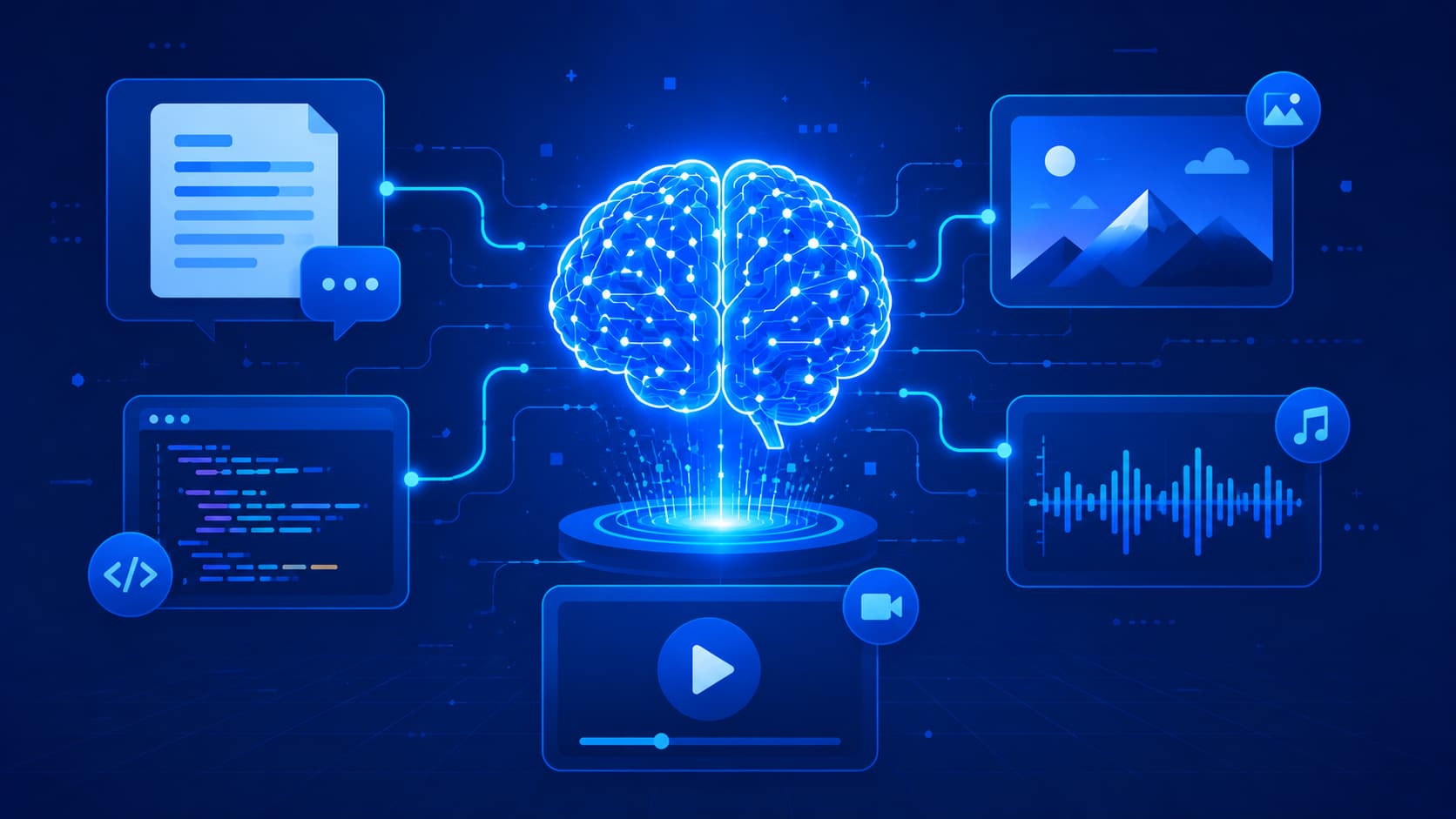

Artificial intelligence can seem mysterious from the outside.
You ask a chatbot a question, upload a photo for analysis, or speak to a virtual assistant, and within seconds you receive a surprisingly accurate response.
Behind those experiences is a technology that's often mentioned but rarely explained in simple terms: the neural network.
If you've already learned about machine learning and deep learning, you've probably seen the phrase several times.
That's because neural networks sit at the heart of many modern AI systems.
They help computers recognize faces, understand speech, translate languages, generate images, and produce natural conversations.
Although the technology is sophisticated, the basic idea is much easier to understand than most people expect.
You don't need to know advanced mathematics or computer science to understand what a neural network does.
Once you grasp the underlying concept, many other AI technologies suddenly make much more sense.
What Is a Neural Network?
A neural network is a computer model designed to recognize patterns by processing information through multiple connected layers.
The idea was inspired by the way neurons communicate inside the human brain, although the similarity is much simpler than the name might suggest.
A biological brain contains billions of neurons working together.
Artificial neural networks don't attempt to recreate the brain in full.
Instead, they borrow one basic principle: many simple processing units can work together to solve complex problems.
Rather than relying on one large calculation, a neural network breaks information into many small calculations that happen across different layers.
As data moves through those layers, the network gradually identifies increasingly meaningful patterns.
This layered approach is what makes neural networks so effective at handling tasks that are difficult to solve using traditional programming.
Why Were Neural Networks Created?
For many years, computers were excellent at following precise instructions.
If every rule could be written clearly, software performed exactly as expected.
The challenge appeared when developers tried to solve problems that couldn't easily be described with fixed rules.
Take handwriting recognition as an example.
No two people write the same letter in exactly the same way.
Trying to describe every possible variation using traditional programming would be nearly impossible.
Neural networks offered a different solution.
Instead of programming every rule manually, developers could train the network using thousands—or even millions—of examples.
Over time, the network would begin recognizing patterns on its own.
That ability transformed problems that once seemed impossible into tasks computers could perform with remarkable accuracy.
The Basic Structure of a Neural Network
Although modern neural networks can become extremely complex, most share the same basic structure.
Input Layer
Everything begins with the input layer.
This is where the network receives information.
Depending on the task, that input might be an image, a sentence, an audio recording, or numerical data.
The network doesn't immediately understand what the information means.
It simply receives the raw data.
Hidden Layers
After entering the network, the information passes through one or more hidden layers.
This is where most of the learning happens.
Each layer processes the information slightly differently, gradually identifying increasingly complex patterns.
Early layers might recognize simple features.
Later layers combine those features into more meaningful concepts.
As the data continues moving through the network, the model becomes better at identifying what it's looking at.
Output Layer
Finally, the processed information reaches the output layer.
This layer produces the final prediction or decision.
Depending on the application, that output might be:
- A recognized face
- A translated sentence
- A predicted word
- A generated image
- A spam detection result
- A product recommendation
Everything the network does ultimately leads to producing this final output.
How Does a Neural Network Learn?
Unlike traditional software, a neural network isn't programmed with every possible answer.
Instead, it improves through training.
During training, the network analyzes huge numbers of examples.
Each prediction is compared with the correct answer.
When the prediction is wrong, the network adjusts itself slightly.
Those small adjustments happen again and again—sometimes billions of times.
Over time, the network becomes increasingly accurate because it continuously reduces its mistakes.
This gradual improvement is what allows modern AI systems to recognize speech, identify objects in photographs, and generate natural language with remarkable accuracy.
Where Are Neural Networks Used?
Neural networks have become one of the most important building blocks of modern artificial intelligence.
While most people never see them directly, they're working behind the scenes in many of the digital services we use every day.
Facial Recognition
One of the most familiar examples is facial recognition.
When you unlock your smartphone with your face, a neural network analyzes facial features and compares them with the data it has learned.
It isn't looking for a single feature like the shape of your nose or the color of your eyes.
Instead, it evaluates many different patterns together before deciding whether it's really you.
Image Recognition
Photo applications can automatically recognize people, pets, landscapes, food, and thousands of other objects.
This ability comes from neural networks trained on millions of images.
Instead of following fixed rules, the network learns what different objects look like by studying countless examples.
Voice Assistants
Virtual assistants like Siri, Google Assistant, and other AI-powered voice systems rely on neural networks to convert spoken language into text and understand what users are asking.
Years ago, voice recognition struggled with different accents and speaking styles.
Modern neural networks have made those conversations much more accurate and natural.
Language Translation
When you translate text online, a neural network helps analyze the meaning of an entire sentence instead of translating each word individually.
This approach produces translations that sound much more natural than older translation systems.
Healthcare
Hospitals and research organizations use neural networks to assist with analyzing medical images, detecting diseases, and supporting medical research.
These systems don't replace doctors.
Instead, they provide additional insights that can help medical professionals make more informed decisions.
Why Are Neural Networks So Effective?
The biggest strength of neural networks is their ability to discover patterns that would be difficult—or even impossible—for humans to describe manually.
Imagine trying to explain every possible way the number "8" can be handwritten.
Some people write it neatly.
Others write it quickly.
Some make it tall, while others make it wide.
Writing rules for every variation would take forever.
A neural network approaches the problem differently.
Instead of memorizing rules, it studies thousands of handwritten examples until it begins recognizing the patterns on its own.
That same principle applies to speech, images, videos, and human language.
The more relevant examples a neural network learns from, the better it usually becomes at recognizing similar patterns in the future.
Do Neural Networks Think Like Humans?
This is one of the most common misconceptions about AI.
The short answer is no.
Although neural networks were inspired by the human brain, they don't think, feel, or understand the world in the same way people do.
They don't have emotions.
They don't possess consciousness.
They don't form opinions or develop personal experiences.
Instead, they process mathematical patterns learned during training.
The results can appear remarkably intelligent, but the process behind them is fundamentally different from human thinking.
Understanding this distinction helps set realistic expectations for what AI can and cannot do.
The Challenges of Neural Networks
Neural networks are incredibly powerful, but they're not without limitations.
They Need Large Amounts of Data
Many neural networks perform best when trained on large, diverse datasets.
If the available data is limited or poorly organized, the model's performance can suffer.
Training Can Be Expensive
Developing advanced neural networks often requires significant computing power.
Training large models can take days or even weeks using powerful hardware, making development both time-consuming and costly.
They Can Be Difficult to Explain
One challenge researchers continue to face is understanding exactly why a neural network reaches a particular conclusion.
While the final prediction may be accurate, explaining the reasoning behind it isn't always straightforward.
This is particularly important in industries like healthcare, finance, and law, where transparency matters just as much as accuracy.
Neural Networks and Deep Learning
Neural networks and deep learning are closely connected, but they aren't exactly the same thing.
A neural network is the underlying model.
Deep learning refers to using neural networks with many layers to solve increasingly complex problems.
In other words, deep learning is built on neural networks.
As those networks become larger and more sophisticated, they gain the ability to recognize increasingly complex relationships within data.
That's why deep learning has become the foundation of many recent breakthroughs in artificial intelligence.
Frequently Asked Questions
Is a neural network the same as artificial intelligence?
No.
A neural network is one technology used within artificial intelligence.
It's commonly used in deep learning systems but represents only one part of the broader AI field.
Why are neural networks called "neural"?
The name comes from the way they're loosely inspired by biological neurons in the human brain.
However, artificial neural networks are mathematical models rather than digital versions of real brains.
Are neural networks used only in ChatGPT?
No.
Neural networks are used in many different AI applications, including image recognition, speech recognition, recommendation systems, language translation, fraud detection, and medical research.
Can a neural network learn on its own?
A neural network learns during training by analyzing data and adjusting its internal parameters.
However, it doesn't independently decide what to learn or create new goals without guidance from developers.
Why are neural networks important?
They're one of the key technologies that allow AI systems to recognize patterns, process language, analyze images, and solve problems that traditional programming struggles to handle.
Conclusion
Neural networks have become one of the foundations of modern artificial intelligence.
Although the mathematics behind them can be highly sophisticated, the core idea is surprisingly approachable.
Rather than following thousands of manually written rules, neural networks learn from examples, gradually improving their ability to recognize patterns and make predictions.
That ability has transformed how computers understand language, analyze images, recognize speech, and support countless digital services.
As AI continues to evolve, neural networks will remain at the heart of many future innovations.
Understanding how they work doesn't just explain today's technology—it also prepares you for the next generation of intelligent systems that will continue shaping the way we live and work.